
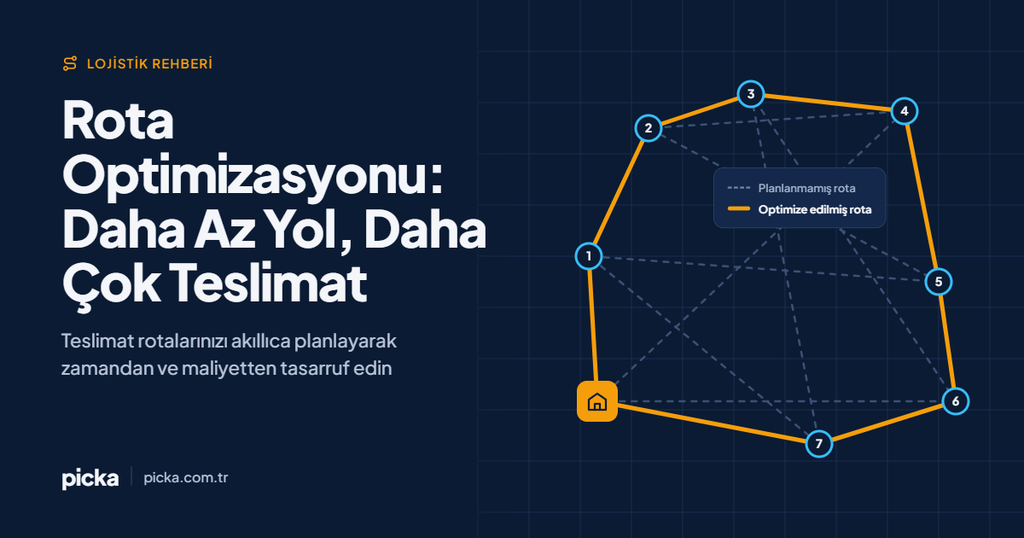
In modern logistics, sustainable success doesn’t come from simply getting safely from point A to point B. The process has to be managed with the right balance of lowest cost, minimum fuel consumption, reduced carbon emissions and maximum customer satisfaction. The best way to strike that balance is route optimization. The AI-powered VRP (Vehicle Routing Problem) algorithms in the Picka TMS infrastructure replace traditional, error-prone manual planning in the route optimization process. They process hundreds of complex variables within milliseconds, giving businesses a high level of operational agility. In today’s competitive market, smart route optimization is essential for lowering logistics costs and scheduling shipments without errors.
So which parameters does a route optimization engine actually take into account?
Vehicle Capacity and Load Type
The maximum weight (kg), volume (m³) and pallet capacity of every vehicle in the fleet define the physical limits of route planning. Whether it’s an FTL (Full Truckload) or LTL (Less Than Truckload) operation, route optimization maximizes trip load factors and prevents empty kilometers and unnecessary fuel costs caused by choosing the wrong vehicle.
Delivery Time Windows
The narrow time slots in which customers, dealers or chain stores commit to receiving goods are treated by the algorithm as a priority constraint. Route optimization ensures full compliance with these windows. Time window compliance is one of the most critical key performance indicators (KPIs), directly increasing customer loyalty and brand reliability.
Driver Working Hours and Break Rules
Maximum daily driving times, working hours and mandatory rest breaks set by national and international regulations are fully built into route calculations. This protects the health and safety of field teams to international standards and minimizes the risks that can arise from regulatory inspections.
Zone Restrictions and Priority Deliveries
Urban heavy-vehicle entry bans, unloading restrictions, bridge and highway transit rules, one-way streets and urgent shipment requests from strategic customers all shape the route sequence. Picka TMS’s route optimization engine filters all these regional constraints within seconds and automatically creates the most efficient, economical and fastest delivery route.
Real-Time Traffic and Weather Conditions
Instead of traditional methods working on static maps, Picka TMS’s route optimization engine calculates live traffic density. It also takes into account dynamic data such as roadworks and adverse weather conditions. If unexpected congestion or an accident occurs during a trip, the system automatically recalculates the route and sends the driver the most up-to-date alternative. This dynamic approach minimizes deviations in delivery times and significantly improves the accuracy of estimated times of arrival (ETA).
Cost, Sustainability and Reporting
Effective route optimization directly affects not only operational speed but also environmental sustainability. Shortening the total distance traveled reduces fuel consumption. Picka TMS provides detailed reports comparing the planned route with the actual route at the end of every trip, so businesses can analyze deviations and continuously improve their processes. Ultimately, route optimization is not just a cost item in modern logistics, but a strategic lever that creates competitive advantage. Processing data intelligently makes every shipment more predictable, more economical and more sustainable.
Contact the Picka team to request a demo tailored to you. To read more articles, visit our blog.
[…] return rate. Every trip without a return load pushes costs directly up. Route optimization saves far more than just fuel […]
[…] Picka WMS lets you configure different methods such as batch, zone and wave picking to suit your warehouse. With handheld terminal integration, every item is verified by barcode, and smart location management places fast-moving products close to the picking area. Shipment planning for picked orders continues seamlessly with Picka TMS. To see how you can make delivery routes more efficient, read our route optimization guide. […]